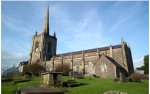
St. Macartin's Cathedral
Enniskillen, Northern Ireland
Baptism
The Church of Ireland - part of the Anglican Communion
For services and meetings, please use the drop down menu on the HOME page
(last updated 31st August 2012)
1. What is baptism?
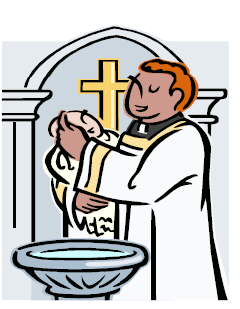
‘Baptism marks the beginning of a journey with God which continues for the rest of our lives, the first step in response to God's love.' (BCP page 357) Jesus was baptised in the river Jordan by John and this marked the beginning of his earthly ministry' (Mark 1:9-11). Near the end of Jesus' earthly ministry he commanded his disciples to ‘Go therefore and make disciples of all nations, baptising them in the name of the Father, and of the Son and of the Holy Spirit'. (Matthew 28:18). For over two thousand years Jesus' followers have begun their Christian lives with the sacrament of baptism. The water of baptism is a visible sign of the grace which God conveys in the sacrament. God's gift in baptism is new birth in Christ, a new direction in life as God's child, and a calling to be a lifelong, faithful disciple of Christ.
‘Baptism marks the beginning of a journey with God which continues for the rest of our lives, the first step in response to God's love.' (BCP page 357) Jesus was baptised in the river Jordan by John and this marked the beginning of his earthly ministry' (Mark 1:9-11). Near the end of Jesus' earthly ministry he commanded his disciples to ‘Go therefore and make disciples of all nations, baptising them in the name of the Father, and of the Son and of the Holy Spirit'. (Matthew 28:18). For over two thousand years Jesus' followers have begun their Christian lives with the sacrament of baptism. The water of baptism is a visible sign of the grace which God conveys in the sacrament. God's gift in baptism is new birth in Christ, a new direction in life as God's child, and a calling to be a lifelong, faithful disciple of Christ.
2. Is there a particular age for Baptism?
No. Baptism can take place at any age. In the Church of Ireland most people are baptisedn as infants. Children are baptised before they can answer for themselves so that they become fully included in the life of the Church. Adults who have not been baptised, or who convert to Christianity, also receive the sacrament of baptism. If they do not know whether or not they have been baptised, they should receive conditional baptism.Baptism is a sacrament which, for any individual, cannot be repeated or undone, because it represents God's once-for-all gift and calling to those baptised. If baptised persons want to affirm their faith at a later stage, the proper procedure is to present themselves for Confirmation or to renew their baptismal vows.
3. What are godparents/sponsors?
It is both a privilege and a responsibility to be asked to be a godparent (also known as sponsor). The godparent promises to help care for the spiritual welfare of the child. It is important therefore that the godparents can answer honestly the declarations of faith and that they will be committed to supporting and praying for their godchild.
4. What happens in the Baptism service?
Baptism welcomes the candidates into the Christian family and the congregation promises to support and pray for them and their parents and godparents (or sponsors). Therefore, the baptism service ideally takes place within a time of public worship. In some situations, or in the case of an emergency baptism, it will be appropriate to have the baptism at another time. At the baptism of infants, parents and godparents are required to make promises on behalf of the child and to undertake to ‘encourage them in the life and faith of the Christian Community' and to ‘care for them, and help them to take their place within the life and worship of Christ's Church' (BCP page 361). As they are answering on behalf of the child, they must also affirm their own Christian faith. Those being presented for baptism will then have water poured on their heads. Water declares God's presence in the life of the candidates and signifies that they become God's adopted children and members of the Church. The sign of the cross is made on the forehead as a visible sign of belonging to Christ: ‘Christ claims you for his own. Receive the sign of the cross. Live as a disciple of Christ' (BCP page 362). As baptism is the beginning of the Christian life, a lighted candle may be presented with the words ‘You have received the light of Christ; walk in this light all the days of your life. Shine as a light in the world to the glory of God the Father' (BCP page 367)
5. What happens after baptism?
After baptism it is the responsibility of the parents, godparents and the wider Church to ensure that each newly baptised child or adult is welcomed and nurtured in the faith as a member of the local and worldwide Christian family. In the fellowship of the Christian community, it is the responsibility of the baptised to make God's gift in baptism their own by sincere faith and resolute commitment to Christ. Otherwise God's gift in baptism is not accepted. Baptism in the name of the Holy Trinity does not confer membership of just one denomination, but rather of the whole Christian family.
6. Are you baptised? Is your child/children baptised?
The Rector will be pleased to chat to anyone regarding baptism of their child/children regardless of age. Adult baptisms can also be arranged - please do not hesitate about contacting the Rector.
No. Baptism can take place at any age. In the Church of Ireland most people are baptisedn as infants. Children are baptised before they can answer for themselves so that they become fully included in the life of the Church. Adults who have not been baptised, or who convert to Christianity, also receive the sacrament of baptism. If they do not know whether or not they have been baptised, they should receive conditional baptism.Baptism is a sacrament which, for any individual, cannot be repeated or undone, because it represents God's once-for-all gift and calling to those baptised. If baptised persons want to affirm their faith at a later stage, the proper procedure is to present themselves for Confirmation or to renew their baptismal vows.
3. What are godparents/sponsors?
It is both a privilege and a responsibility to be asked to be a godparent (also known as sponsor). The godparent promises to help care for the spiritual welfare of the child. It is important therefore that the godparents can answer honestly the declarations of faith and that they will be committed to supporting and praying for their godchild.
4. What happens in the Baptism service?
Baptism welcomes the candidates into the Christian family and the congregation promises to support and pray for them and their parents and godparents (or sponsors). Therefore, the baptism service ideally takes place within a time of public worship. In some situations, or in the case of an emergency baptism, it will be appropriate to have the baptism at another time. At the baptism of infants, parents and godparents are required to make promises on behalf of the child and to undertake to ‘encourage them in the life and faith of the Christian Community' and to ‘care for them, and help them to take their place within the life and worship of Christ's Church' (BCP page 361). As they are answering on behalf of the child, they must also affirm their own Christian faith. Those being presented for baptism will then have water poured on their heads. Water declares God's presence in the life of the candidates and signifies that they become God's adopted children and members of the Church. The sign of the cross is made on the forehead as a visible sign of belonging to Christ: ‘Christ claims you for his own. Receive the sign of the cross. Live as a disciple of Christ' (BCP page 362). As baptism is the beginning of the Christian life, a lighted candle may be presented with the words ‘You have received the light of Christ; walk in this light all the days of your life. Shine as a light in the world to the glory of God the Father' (BCP page 367)
5. What happens after baptism?
After baptism it is the responsibility of the parents, godparents and the wider Church to ensure that each newly baptised child or adult is welcomed and nurtured in the faith as a member of the local and worldwide Christian family. In the fellowship of the Christian community, it is the responsibility of the baptised to make God's gift in baptism their own by sincere faith and resolute commitment to Christ. Otherwise God's gift in baptism is not accepted. Baptism in the name of the Holy Trinity does not confer membership of just one denomination, but rather of the whole Christian family.
6. Are you baptised? Is your child/children baptised?
The Rector will be pleased to chat to anyone regarding baptism of their child/children regardless of age. Adult baptisms can also be arranged - please do not hesitate about contacting the Rector.